Short, simple sentences with “representation”, suitable for children and primary/elementary school, with common expressions and related words. You'll also find examples for middle and high school.
Representation is the act of showing or describing something. It can mean a picture, symbol, or model that stands for an idea or object. It also refers to speaking or acting on behalf of others, like in government or law.
14 sentences with “representation” — examples
1.
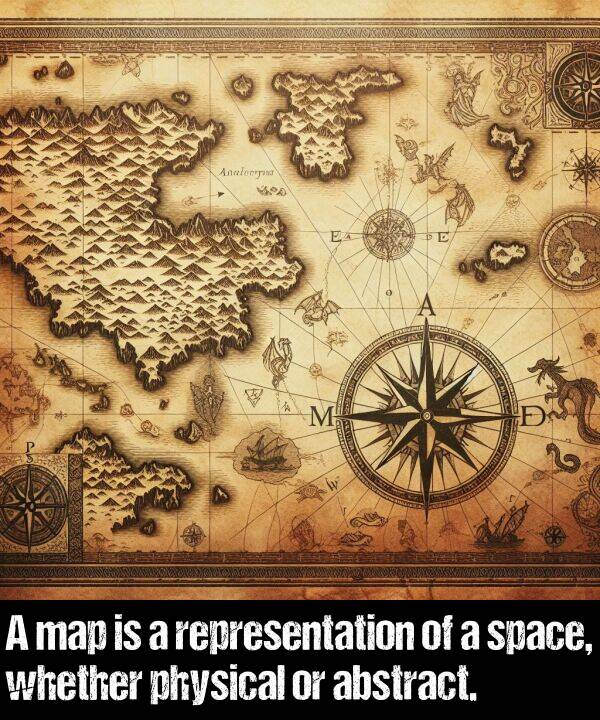
A map is a representation of a space, whether physical or abstract.
···
2.
Phonetics is the study of the sounds of speech and their graphic representation.
···
3.
Phonology studies the sounds of speech and their representation in the language system.
···
4.
In the 18th century, the Third Estate was much more diverse, dynamic and educated than before. However, it did not enjoy better political representation.
·
5.
The crisis of representation reached a boiling point around 600 BC when there was a real possibility of civil war between ordinary citizens and aristocrats.
·
6.
Its government had representation for all the wealthy classes, but no one represented the majority of the city's population, which consisted of the urban poor.
·
7.
In the 7th century BC, hoplites in many polis clamoured for better political representation, as traditional aristocrats excluded them from meaningful political power.
·
8.
The Roman Republic had a fairly complex system of government and representation, but it was one that would last some 500 years and preside over the vast expansion of Roman power.
·
9.
In the case of Rome, an ongoing class struggle called the Conflict of Orders took place from about 500 BC to 360 BC. (140 years!), in which the plebeians fought for more political representation.
·
10.
Paintings, stories and theatrical performances arose having to do with the 'dance of death', a representation of the futility of worldly possessions and status in the face of the inevitability of death.
·
11.
During the Middle Ages, the Third Estate was represented by the wealthy elites of the cities and large towns, and the peasantry, despite being the majority of the population, had no representation at all.
·
12.
Only nobles had political representation in the various parliamentary bodies, with the notable caveat that cities still had privileges of their own (the Paris parliament, for example, wielded significant power in French politics).
·
13.
In turn, voting was by estates, not by proportional representation, and the first and second estates generally joined together to outvote the third. Thus, the small minority of the population consisting of nobles and clerics could always outvote the majority of the population in this traditional voting system.
·
14.
In practice, by the early third century BC the plebeians had won significant legal rights, namely the right to representation and to legislate, but these victories were often overshadowed by the fact that wealthy plebeians increasingly joined with the existing patricians to create something new: the Roman aristocracy.
·
✨Generate sentences with artificial intelligence
Free AI sentence generator: create age-appropriate sentence examples from any word. Ideal for students and language learners.